Tesla turbine in PLA
Team undergraduate research · UNISANTA, 2026
Academic research with a physical prototype
Unexpected contact between the rotor and housing prompted an investigation. The study combines evidence from the prototype, calculations and simulation to examine the mechanisms behind the observed behaviour.
- Methods
- Dimensional measurement, analytical calculation and finite elements
- Tools
- SolidWorks, Ansys, Flow Simulation
- Team
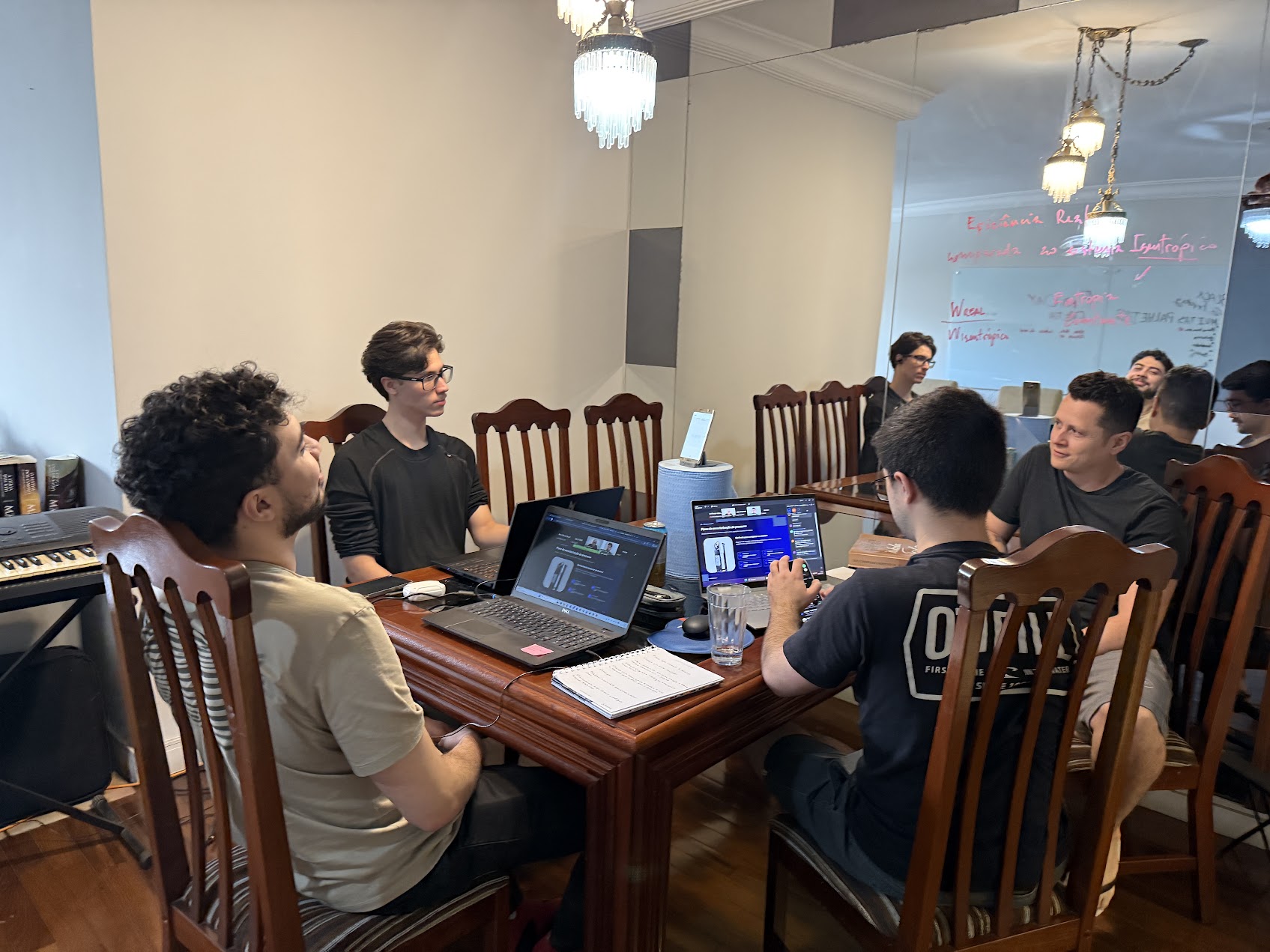
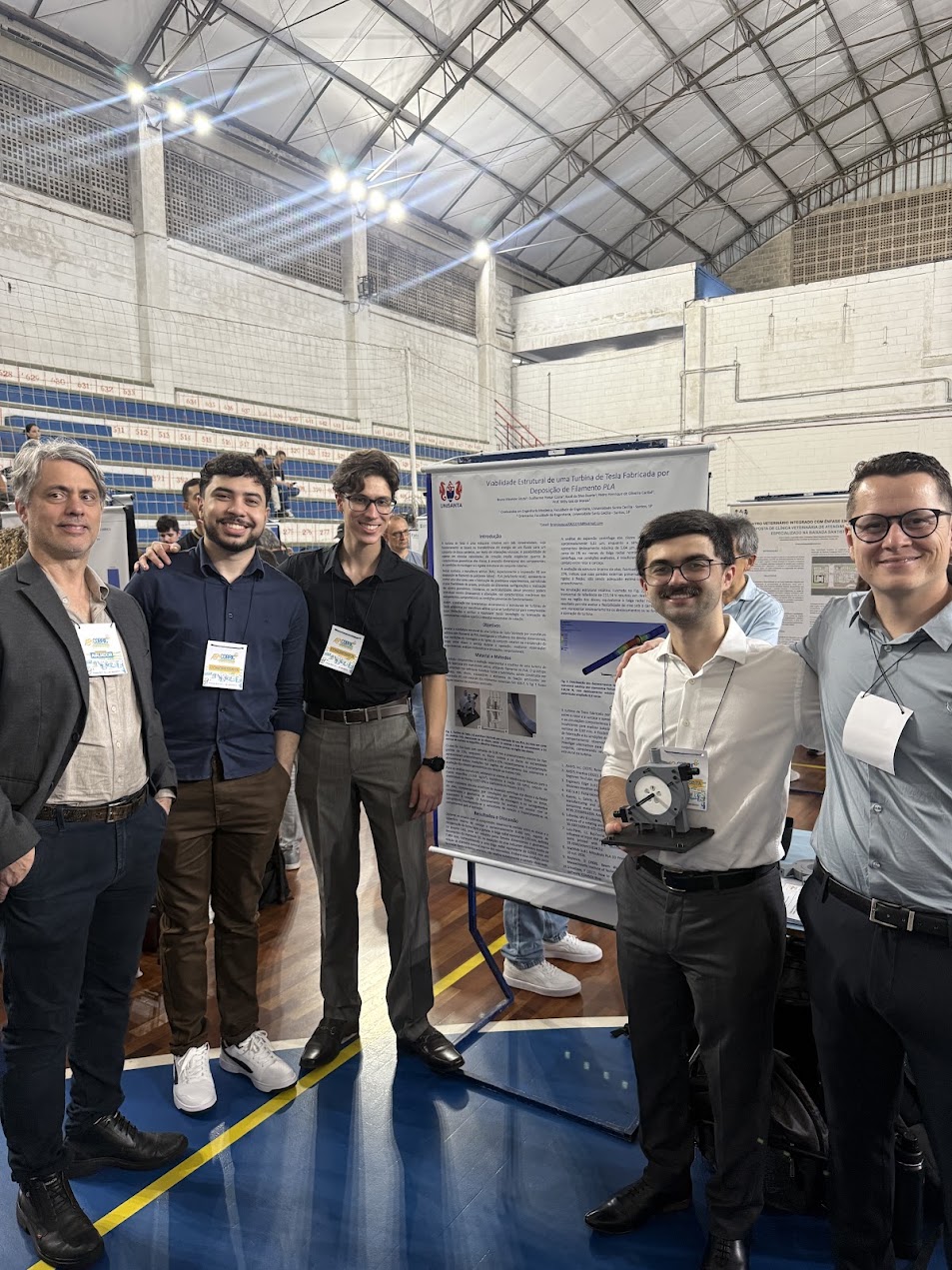
- With Bruno Souza, Guilherme Pomar Costa and Kauê Duarte. Advised by Prof. Willy Ank Morais
- Research dissemination
- 18th COBRIC: structural investigation. 26th CONIC-SEMESP: co-authored efficiency study.
The observed problem
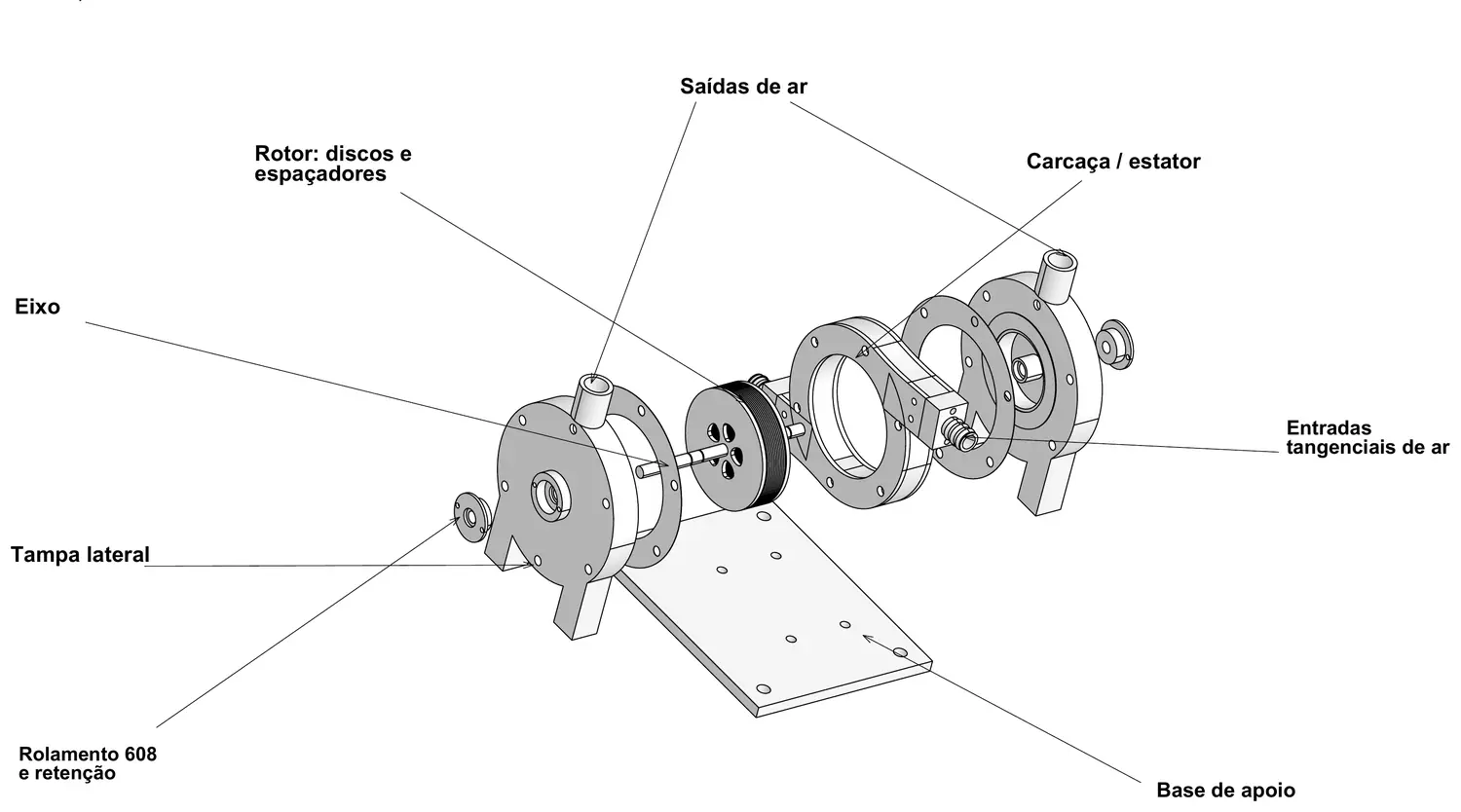
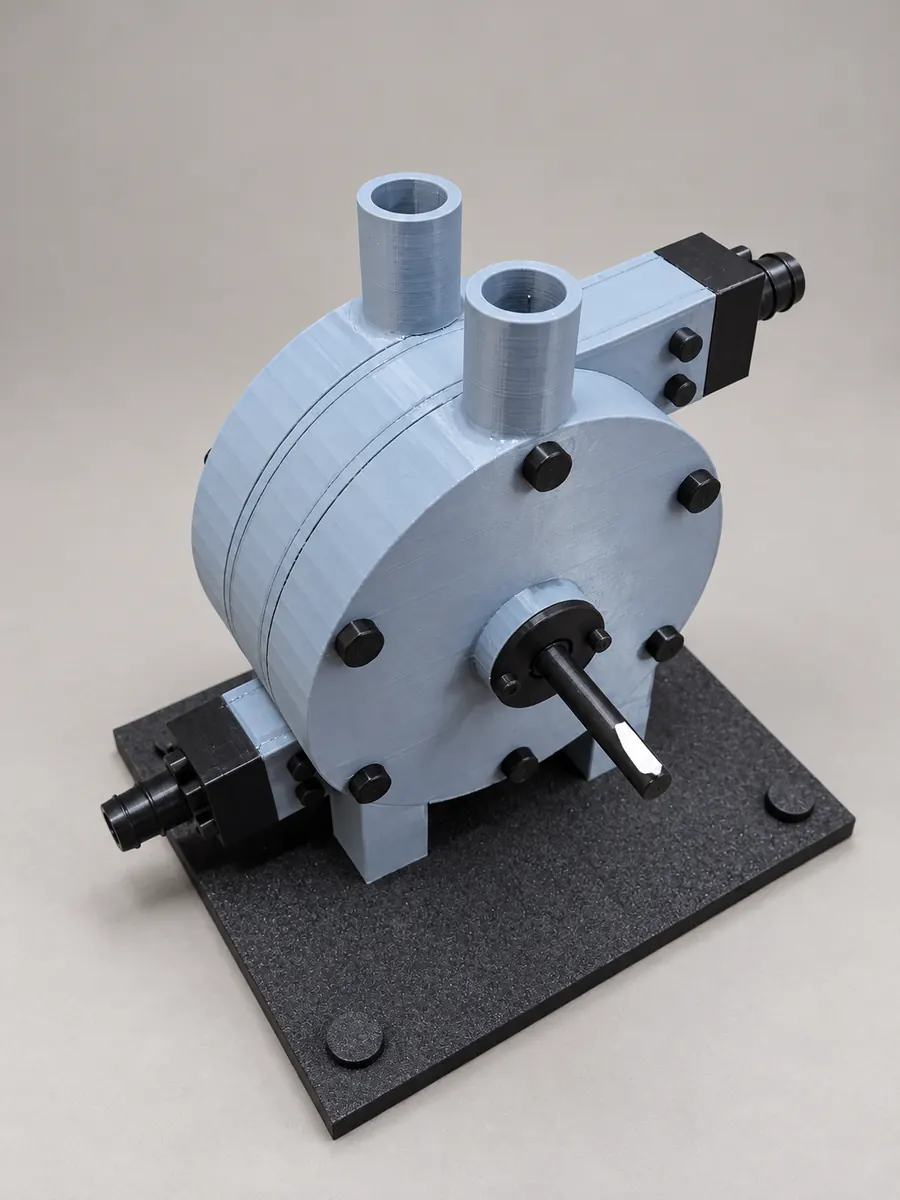
The prototype uses a PLA-printed housing, disks and shaft and is driven by compressed air. During a test, near 8,000 rpm, the rotor contacted the housing. Marks on the components provided evidence for investigating the source of the interference.
How we investigated
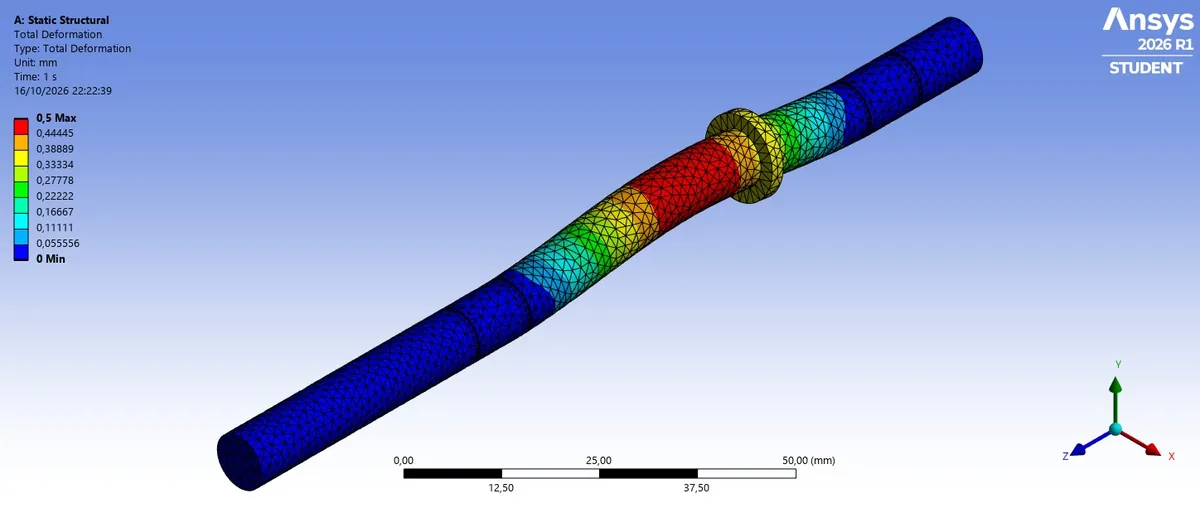
Starting from a nominal clearance of 500 µm, we combined dimensional measurements, analytical calculations of centrifugal disk expansion and finite element analyses of the assembly and shaft.
Calculations and simulations ruled out centrifugal expansion as a sufficient explanation and directed the investigation towards shaft flexibility and manufacturing and assembly deviations. Finite element analysis alone does not establish the cause of the observed contact.
What the study demonstrates
The research brings together construction, observation and analysis to reassess a design hypothesis. Its value lies in relating model results to the behaviour of the prototype while documenting the conditions and limits of the investigation.
Sharing the research
The work developed into two strands: a structural investigation prepared for the 18th COBRIC, and a parametric study of isentropic efficiency as a function of disk spacing, presented at the 26th CONIC-SEMESP.
I am a co-author of the CONIC-SEMESP paper, entered in the In Progress category and presented orally by Bruno Mauricio Souza on 11 November 2026.
Opportunities · Projects · Collaborations
Let’s build what comes next.
I am interested in professional opportunities, projects and partnerships that connect mechanics, electronics and software. Get in touch to discuss an opportunity or share a challenge.
[email protected] LinkedIn